

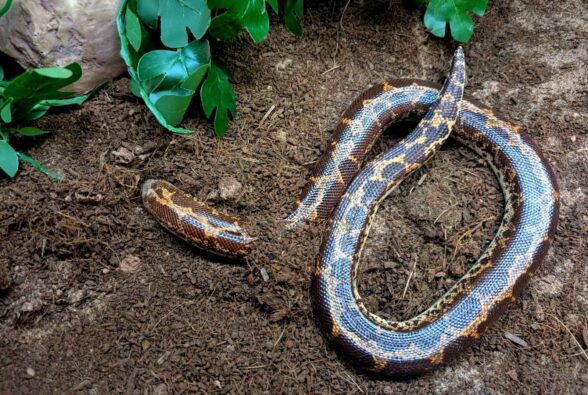
Meet Dolores, our Kenyan Sand Boa, who has been part of the animal collection at Merrist Wood College and University Centre for 20 years.
Dolores has spent all these years happily enjoying life in her favourite vivarium, content in her solitary surroundings and receiving plenty of love and care from her dedicated animal keepers.
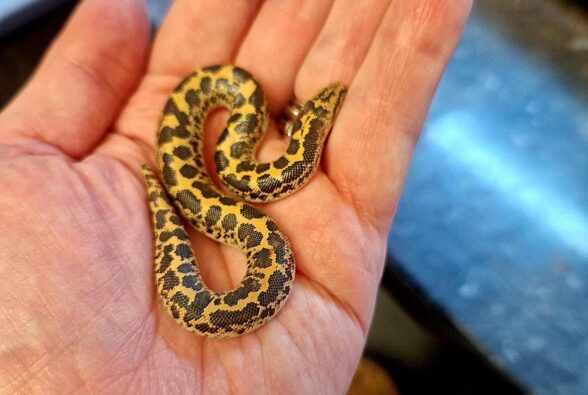
Six weeks ago, our Zoo team had quite the surprise when they discovered that Dolores had reproduced via parthenogenesis – a form of asexual reproduction where offspring develop without fertilisation – resulting in nine healthy offspring!
How does parthenogenesis work?
Normally, reproduction involves an egg from a female being fertilised by sperm from a male. But with parthenogenesis, an egg can develop into an embryo without being fertilised.
In the case of sand boa Dolores, this means she has apparently managed to produce nine babies without a male being involved!
Are the babies exact clones of their mum?
Not necessarily! This is where it gets even more interesting.
Although parthenogenesis is a form of asexual reproduction, the babies aren’t always genetically identical to their mother.
In snakes, the process can involve genetic material from the mother’s own egg development, meaning the offspring may have different combinations of her genes.
Is it common?
No, it’s relatively rare in snakes, although it has been documented in several species of boas, pythons and other snakes.
Some other animals, including certain sharks, lizards and insects, can also reproduce through parthenogenesis.
Scientists are still studying why it happens in some species. It can occur even when females have access to males, so it isn’t necessarily a response to being alone. But in situations with few or no males is does guarantee reproduction and allow for swift colonisation of new habitats!
Why is Dolores’s story so interesting?
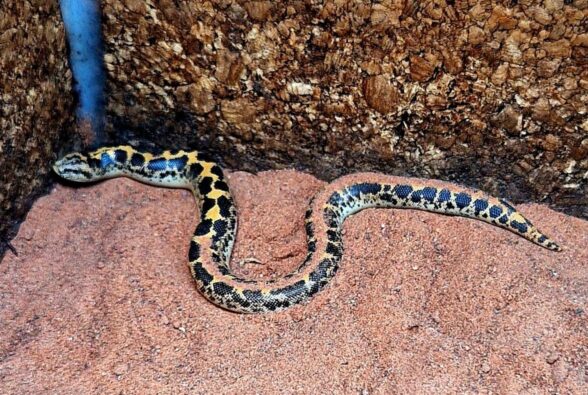
For Merrist Wood students, this is a fantastic opportunity to observe an unusual reproductive event first-hand, rather than simply reading about it in a textbook.
It opens up discussions about genetics, reproduction, animal biology and how remarkably adaptable some species can be.
Taggie Gatchell, Merrist Wood’s Head of Animal Collections says: “There’s never a dull moment working with animals; a reason I still thrive in the field after 20 years is because their remarkability fuels our passion and ensures we are always learning and growing as individuals”
The team are documenting their progress as the babies grow, providing a fascinating real-life case study for our students and staff to explore during breeding and science-focused modules.
Just another example of how incredible the animal world can be – as if we needed any more convincing!
Want to be part of the action?
From fascinating discoveries like Dolores’s surprise arrivals to hands-on experience caring for an incredible range of animals, there’s never a dull moment studying Animal Management at Merrist Wood College and University Centre!
If you have a passion for animals and want to turn that interest into a career, why not explore our Animal Management programmes and discover where they could take you?
Find out more about our range of Animal Management programmes here